

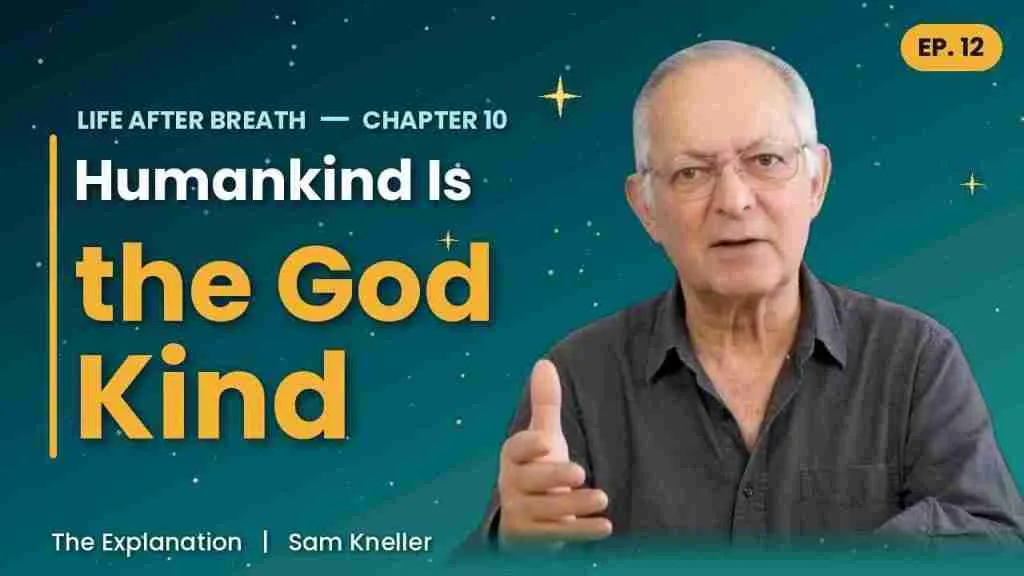
Genesis repeats one phrase ten times before it ever mentions a human being: “after its kind.” Oranges make oranges. Salmon make salmon. Then Chapter 10 of Life After Breath turns that law on us, and the answer it finds is the biggest hidden truth in the Bible — God is not a solitary being, He’s a Family, and humankind is the God kind.
This is Week 12 of a 54-week journey through Life After Breath: A Hitchhiker’s Guide to Consciousness — a new weekly series from The Explanation. Every Monday, a new chapter lands here, on YouTube, and in your inbox.
Chapter 9 resolved the plural-singular paradox into a relational God — Father and Son, two who are one. Chapter 10 takes that same grammar and asks a much bigger question: if Elohim is a Family, what does that make us? The answer leans on a law from Genesis 1 that most readers skim past without noticing it’s been stated ten separate times.
This isn’t the first time The Explanation has made the “God is a Family” case. An earlier piece, The All-Time Biggest Hidden Truth. Elohim, God is a Family, covers much of the same family vocabulary and the “after his kind” reproduction law under the MBPS banner. This week’s chapter makes a tighter, more pointed version of that same evidence, but pushes past “God is a Family” to the sharper claim the earlier piece never quite names outright: humankind is the God kind.
Chapter 10: Elohim is Plural. God is a Family
Word for word, from the book:
Here’s the biggest hidden truth in the Bible, the one that changes everything: God is not a solitary being; He is a Family. This isn’t a metaphor. It’s the core reality of who Elohim is. And this truth is hidden in plain sight, starting on the very first page.
We’ve already seen that Elohim is a plural word. But it’s not just a grammatical quirk—it’s a revelation. The “us” and “our” in Genesis 1:26 point to the divine family—God the Father and God the Son (the Word, who later became Jesus Christ)—consulting together to create humanity. Their relationship is the model for all relationships.
This is why human families exist. Marriage, parenthood, brotherhood—these aren’t just social constructs. They are a physical reflection of the divine reality. We are made in the image of a familial God, so we are hardwired for family. Ephesians 3:14-15 makes this connection explicit, stating that every family in heaven and on earth derives its name and nature from God the Father. The Greek word for family (patria) is directly linked to the word for father (pater).
The New Testament is saturated with this family language because it reveals our ultimate destiny:
- God is called our Father (Matthew 6:9).
- Jesus is the Son and the firstborn among many brothers (Romans 8:29).
- Believers are called children of God (Romans 8:16) and sons and daughters (2 Corinthians 6:18).
- The Church is described as a mother (Galatians 4:26) and will ultimately be the wife of Christ (Revelation 19:7).
This isn’t random symbolism. This is the story of a family—God’s family—expanding. We are not just God’s creations; we are His potential children, being groomed to join His eternal family.
This hidden truth is the key to understanding the creation account. In Genesis 1, a crucial phrase is repeated ten times: “after its/their kind.” An orange tree produces oranges. A salmon produces salmon. A scorpion produces scorpions. This establishes an inviolable law of reproduction: kinds produce their own kind. There is variety within a kind, but a kind never produces a different kind. Apes have always produced apes; they have never, and will never, produce humans.
This biblical principle of “after its kind” directly contradicts the evolutionary idea of one kind transforming into another over millions of years. Science itself confirms this barrier; while there can be cross-breeding within a kind (like different dog breeds), hybridization between different kinds (like a horse and a donkey producing a sterile mule) is the exception that proves the rule—they cannot create a new, sustainable kind.
Now, reread Genesis 1:26 with this law in mind: “Then God said, ‘Let Us make mankind in Our image, according to Our likeness'”
The question is simple: If everything reproduces “after its kind,” then what kind are we?
The answer is the ultimate hidden truth: Humankind is the God kind. We were created after the God kind. Our physical form is a temporary model, but our potential is to be born into that divine family as literal spirit-born children of God. This is why we possess consciousness and a mind—because we are a lesser, physical reflection of Elohim’s ultimate consciousness and mind.
Our consciousness is not an accident of evolution; it is the imprint of our Parentage. Our mind is not just a sophisticated computer; it is the tool designed for us to eventually reason, create, and relate on a godly level. This is why the evolutionary narrative feels so empty—because it tries to explain a godly mind with animal origins, and the chasm between them is impossible to cross.
The reason you may have never heard this is that this truth dismantles the core of both secular humanism and much of traditional religion. It reveals a breathtaking destiny: you were not born to just live and die. You were born to be born again—into the Family of God.
The Breakthroughs Behind Chapter 10’s Case That Humankind Is the God Kind
Theological Breakthrough: The Plurality of the Godhead. The chapter moves beyond the traditional, often confusing, Trinity doctrine by presenting “Elohim” not as a mysterious three-in-one singularity, but as a literal, divine Family unit—currently consisting of the Father and the Son (Yahveh/Jesus). This clarifies the “us” and “our” in Genesis 1:26, providing a coherent framework for understanding the Godhead as a relational entity. This makes God’s plan about expanding His Family, not just worshipping a solitary monarch.
Psychological Breakthrough: The Origin of the Human Need for Family. It answers the profound psychological question of why humans are hardwired for family, relationship, and social bonding. The institution of human family is not a cultural accident or mere biological imperative; it is a physical type of a divine reality. Our deep-seated need for family connection finds its ultimate origin and purpose in the fact we are created in the image of a Family God. This provides a powerful, transcendent basis for human relational psychology.
Scientific Breakthrough (Anthropological): The “God Kind” vs. Evolutionary Theory. The chapter uses the repeated biblical phrase “after his/their kind” (Genesis 1) to introduce a scientific argument. Just as apes only produce apes and oranges only produce oranges (an inviolable biological law), humans were created “after the God kind.” This posits that humanity is a distinct “kind,” not an evolved animal, but a created order of being with a divine origin and potential. This challenges the core premise of human descent from a common ape-like ancestor.
Hermeneutical Breakthrough (Biblical Interpretation): Solving Translation Contradictions. It resolves the apparent contradiction of a plural noun (“Elohim”) being used with singular verbs. This isn’t a grammatical error but a profound theological clue. The unity of purpose and action within the God Family allows for a singular verb, while the plural noun reveals the multiple Beings in counsel. This insight is key to unlocking a consistent understanding of God throughout the Scriptures, from Genesis to Ephesians 3:14-15.
Philosophical Breakthrough: The Purpose of Human Existence. It provides a definitive answer to the greatest philosophical question: “What is the purpose of life?” The purpose is relational and familial. Humans are on Earth to develop godly character through relationships (the two great commandments) to ultimately be born into the God Family as spiritual sons and daughters. This reframes existence from a search for meaning to a process of preparation for a specific, glorious destiny.
Sociological Breakthrough: The Divine Blueprint for Society. It argues that the family unit is the fundamental building block of society because it is the fundamental building block of the universe, reflecting the nature of Elohim. Therefore, the breakdown of the family unit isn’t just a social problem; it’s a cosmic rebellion against the created order. The health of a society can be directly linked to its adherence to this divine familial blueprint.
FAQ: Humankind Is the God Kind
What does “humankind is the God kind” actually mean?
It’s the central claim of Chapter 10 of Life After Breath: Genesis 1 establishes a reproduction law — every living thing multiplies “after its kind” — and then Genesis 1:26 applies that same law to us. If kinds only ever produce their own kind, and we were made “in Our image, according to Our likeness,” the conclusion is that humankind is the God kind: a distinct created order, not an evolved animal.
Is “Elohim is plural” just a grammar footnote, or does it matter?
It matters more than a footnote. Elohim being grammatically plural is what makes the “Us” and “Our” in Genesis 1:26 possible in the first place — God the Father and God the Son consulting together, as a family, over the decision to create humanity. The grammar isn’t decorative; it’s the first clue that the God who makes us is relational by nature, not solitary.
How many times does Genesis repeat “after its kind”?
Ten. Chapter 10 points out that Genesis 1 repeats the phrase “after its/their kind” ten separate times — oranges producing oranges, salmon producing salmon, scorpions producing scorpions — before ever applying the same law to humanity. That repetition is the chapter’s whole argument in miniature: it’s not a throwaway phrase, it’s the established law behind the claim that humankind is the God kind.
The chapter’s claim is narrower than that: hybridization can happen within limits (different dog breeds, or a horse and donkey producing a mule), but it never produces a new, sustainable kind — the mule is a biological dead end, not a new species branching forward. On that basis, the chapter argues apes have only ever produced apes, never humans, because “after its kind” doesn’t bend for us any more than it bends for them.
How do I follow along each week?
Subscribe to the weekly email to get each new chapter as it releases, or catch the video version on YouTube channel @theexplanation.
What’s Next
Chapter 10 leaves us with the family’s identity settled: Elohim is plural, God is a Family, and humankind is the God kind, destined to be born into that family. Next week, Chapter 11 asks the next logical question: “God Works & Humans Work” — if God is a Family, what does He actually do, and what does that have to do with you?
Want the full, scholarly original now instead of waiting a week at a time? Get Mind-Body Problem Solved.

Dig Deeper into The Explanation
Online Study Courses to Uncover the Mystery of Adam and Eve’s Nakedness… with no fuss. Free video mini-course revealing the God-intended meaning of Scripture via Biblical Hebrew. It’s so easy, it’ll blow you away. Join now and add new motivation to your Bible study.
Join The Explanation Newsletter to stay informed of updates. and future events. No obligations, total privacy, unsubscribe anytime, if you want.
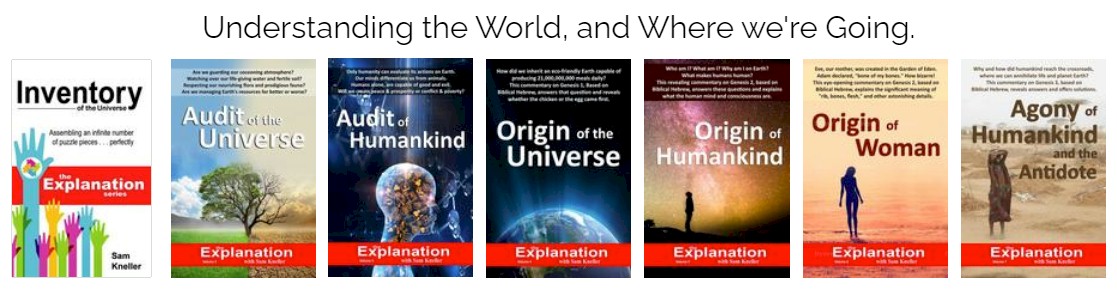
The Explanation series of seven books. Free to read online or purchase these valuable commentaries on Genesis 1-3 from your favorite book outlet. E-book and paperback formats are available. Use this link to see the details of each book and buy from your favorite store.
Since you read all the way to here… you liked it. Please use the Social Network links just below to share this information from The Explanation, Humankind Is the God Kind: The Unmistakable Secret Genesis Repeats 10 Times
Let’s Connect!