Pick a side in the spiritual vs secular worldview debate, and you’re already playing the wrong game.
Here’s why neither team has cracked the mind-body problem — and what actually does.
This is the Introduction of our journey through Life After Breath: A Hitchhiker’s Guide to Consciousness — a new weekly series from The Explanation. Every Tuesday, a new chapter lands here, on YouTube, and in your inbox.
Spiritual vs secular worldview. Pick one. That’s usually where this conversation starts. It’s also where it stalls. Team Spiritual believes in a Higher Power behind everything. Team Secular trusts only what can be measured, replicated, and proven. Both teams have spent centuries arguing about the mind-body problem — how a non-physical thought connects to a physical brain. Neither has won. The Introduction to Life After Breath opens by showing you exactly why. Then it shows you why picking a side was never the move.
Introduction: Spiritual or Secular?
Alright, let’s get this party started. But first, you’ve got to pick your team. Don’t worry, no one’s keeping score yet.
Are you on Team Spiritual? You believe there’s something more out there—a Higher Power, God, the Universe, some kind of force that kicked everything off. You’re cool with the idea that there’s a reality beyond what we can see, touch, and measure.
Or are you on Team Secular? You’re a facts-and-figures person. If you can’t measure it in a lab, replicate it in a study, or prove it with math, it’s not real. For you, the incredible complexity of the universe and life is a beautiful accident, the result of billions of years of random physical processes.
Here’s the plot twist: It doesn’t matter which team you’re on right now.
Why? When it comes to the mind-body problem—the mystery of how your thoughts connect to your brain—both teams have struck out. For centuries, the captains of both teams—science, philosophy, and religion—have been arguing, but none of them has brought the trophy home.
Let’s break down the scoreboard:
Science is amazing at telling us what things are and how they work. It can map your brain down to the last neuron. But ask a scientist what the mind actually is or why you have consciousness, and they’ll start mumbling about “emergent properties” or “the hard problem.” They’re lost in the woods on this one.
Philosophy is great at asking smart, dizzying questions. But it’s all just… talk. It’s like a debate club that never actually finds an answer. It’s all human imagination with no way to prove any of it.
Religion? Don’t get too comfortable, Team Spiritual. You guys are maybe in the worst shape of all. You talk a big game about the soul and spirit, but can you even explain your own founding document? Take the verse that describes the creation of humanity, Genesis 2:7. What does it mean that God “breathed the breath of life”? Is that a metaphor? Why is it “breath of lives” (plural) in the original Hebrew? What’s a “living soul”? If you ask ten different religious leaders, you’ll get twenty different answers. It’s a theological food fight in there.
Each side is trying to solve a 5,000-piece puzzle, but they’re both missing the same crucial piece. Team Secular is trying to force a piece made of pure physical matter. Team Spiritual is trying to force a piece made of vague spiritual energy. Neither one fits.
Neither Team Spiritual Nor Secular – A Different Approach
This book is going to try something completely different. We’re not starting with either team’s rulebook.
We’re going to start by looking at the puzzle itself. We’re going to lay out all the pieces everyone can agree on:
- The physical universe exists (planets, water, your body).
- Life exists (plants, animals, you).
- Humans exist (that’s us).
- Humans have brains (a physical organ).
- Humans have minds (your thoughts, consciousness, you).
These are the facts on the table. The goal is to find the missing piece that connects #4 and #5. How does the lump of gray matter in your skull relate to the experience of being you?
For Team Secular, the first part of this book is for you. We’re going to walk through the physical world in a way that shows how the materialist view hits a hard, dead-end wall when it tries to explain consciousness. We’re not going to preach; we’re just going to follow the evidence where it leads, and it leads to a cliff edge.
For Team Spiritual, you might want to skip ahead, but don’t. You need to see this, too. Because your team is a mess of conflicting ideas. You all agree there’s a Higher Power, but you can’t agree on who it is, what it wants, or what it said. You’ve got a thousand different maps claiming to lead to the same treasure.
This book argues that to solve the puzzle, we all have to agree to look at the one original instruction manual that claims to explain it: the Bible. But not the translated, argued-over, confused version we have today. We need to go back to the original language and the original meaning, before centuries of tradition piled on.
This isn’t about religion. It’s about data. The Bible is the oldest and most detailed source we have that claims to explain the origin and purpose of the human mind. Our job is to forensically examine that source with fresh eyes, using the keys of the original Hebrew language, to see if it actually holds the missing piece.
So, whatever team you’re on, take a deep breath. Suspend what you think you know. The goal here isn’t to win an argument for your side. The goal is to finally solve the mystery. Let’s see where the pieces actually fit.
The Breakthroughs
From Theology & Philosophy:
Redefines “Theology”: It distinguishes “theology” (the study of God’s words and logic) from “religion” (human traditions and practices), proposing that the former is a valid path to truth based on a source’s reasoning, not human doctrine.
Identifies a Universal Blind Spot: It asserts that no major religion or theology truly understands the mechanics of Genesis 2:7—the creation of the first human—which is the foundational event for the entire mind-body discussion.
From Science & Scientific Philosophy:
Declares the Limits of Physicalism: It states that science and philosophy, by limiting themselves to the physical arena and human imagination, have hit an insurmountable wall because they ignore a non-physical element essential to the solution.
Embraces “Ironic Science”: It uses John Horgan’s concept of “ironic science” (speculative, post-empirical ideas that don’t converge on truth) to validate why proper science and new, non-scientific methods are needed.
The “Grain of Salt” Principle: It teaches readers to identify speculative language in scientific literature (e.g., “perhaps,” “may have,” “plausible ideas”) as signs of current theoretical limitations, especially regarding origins.
From Psychology & Epistemology (How We Know):
The Two Belief Systems: It reduces the starting point of all human reasoning to two core beliefs: either the universe’s puzzle pieces assembled randomly (physicalism) or were assembled by a Higher Power (spiritualism). This simplifies a complex debate into a fundamental choice of worldview.
FAQ
Is the mind-body problem really a spiritual vs secular worldview question?
That’s how it looks at first. Team Spiritual says a Higher Power explains the mind. Team Secular says only physical processes do. Life After Breath argues both starting points hit the same wall — the mind-body problem isn’t solved by picking a worldview. It’s solved by going back to what the Bible’s original Hebrew actually says, before either team’s assumptions get added on top.
Do I have to pick Team Spiritual or Team Secular before reading this?
No. That’s the point of the chapter. Whichever team you’re on right now, the evidence is laid out the same way for you. You weigh it and decide for yourself.
Why can’t science, philosophy, or religion explain the mind on their own?
Science measures the physical brain but stalls on why you’re conscious at all. Philosophy asks sharp questions but never lands an answer anyone can prove. Religion talks about the soul and spirit but can’t agree on what its own founding text — Genesis 2:7 — actually means. Each one is missing the same piece.
How is Life After Breath different from Mind-Body Problem Solved?
Same research, same author, same solved mind-body problem — but Life After Breath tells it as a shorter, narrative “detective story” instead of a dense, scholarly one. Want the full scholarly detail, verse-by-verse? Start with the original.
How do I follow along each week?
Subscribe to the weekly email to get each new chapter as it releases, or catch the video version on the YouTube channel @theexplanation.
What’s Next
This is chapter two of fifty-two. Next week: a universe fine-tuned to impossible odds — and why science still can’t explain how it got that way on its own.
Whichever side of the spiritual vs secular worldview divide you started this chapter on, next week the evidence starts stacking up either way.
Want the full, scholarly original now instead of waiting a week at a time? Get Mind-Body Problem Solved. Want Life After Breath? Available at all online and offline stores. Here’s where.
Dig Deeper into The Explanation
Online Study Courses to Uncover the Mystery of Adam and Eve’s Nakedness… with no fuss. Free video mini-course revealing the God-intended meaning of Scripture via Biblical Hebrew. It’s so easy, it’ll blow you away. Join now and add new motivation to your Bible study.
Join The Explanation Newsletter to stay informed of updates. and future events. No obligations, total privacy, unsubscribe anytime, if you want.
The form you have selected does not exist.
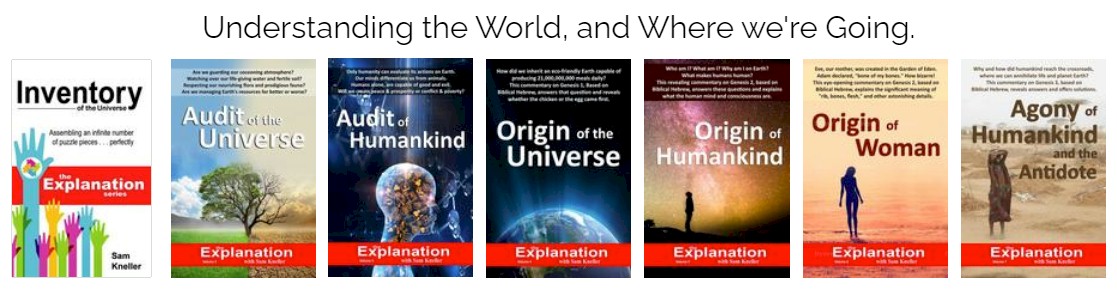
The Explanation series of seven books. Free to read online or purchase these valuable commentaries on Genesis 1-3 from your favorite book outlet. E-book and paperback formats are available. Use this link to see the details of each book and buy from your favorite store.
Since you read all the way to here… you liked it. Please use the Social Network links just below to share this information from The Explanation, Spiritual vs Secular Worldview: Why Both Sides Have Struck Out
Let’s Connect!