


Science, philosophy, and religion have each taken their best shot at the mind-body problem and struck out. Chapter 5 of Life After Breath asks the question this series has been building to: what does theology and the mind-body problem look like when you finally put them together?
Chapter 5, Theology and the mind-body problem, Life After Breath
This is Week 7 of a 52-week journey through Life After Breath: A Hitchhiker’s Guide to Consciousness — a new weekly series from The Explanation. Every Monday, a new chapter lands here, on YouTube, and in your inbox.
For four straight chapters, this series has asked the same three witnesses — science, philosophy, and religion — to explain how we got here: a universe fine-tuned to impossible odds, dead rocks that somehow became living cells, a physical brain that somehow produces a non-physical mind, and a category of cognition no animal shares. Every time, the honest answer has been the same: no explanation. Chapter 5 stops asking the same three witnesses the same question and calls a fourth: theology and the mind-body problem, together, for the first time in this book.
This isn’t new ground for The Explanation — an earlier piece walks through much of the same failed search: here’s the original MBPS-era take on the same three strikeouts. This week’s chapter tells the same story inside the fuller Life After Breath argument, as the hinge that closes Part 1 and opens the door to Part 2’s source material.
Chapter 5: Human Reasoning. No Explanation for the Mind
Let’s be brutally honest. We’ve hit a wall. A big, fat, embarrassing wall. We’ve let science, philosophy, and religion take their best shots at the biggest mystery we’ve got—the mind-body problem—and they’ve all whiffed. Strike three. They’re out. So, if the all-star team of human genius can’t figure this out, where the heck are we supposed to turn?
Think about the journey. We’re made of stardust. Cool story, bro. But where did that stardust come from? No explanation. How did that stardust get perfectly tuned to form a life-supporting planet like Earth? No explanation. Then, somehow, dead rocks and chemicals decided to wake up and become alive. Seriously, no explanation. And then, the biggest leap of all: that living matter somehow sparked into ethereal consciousness, into a mind that can wonder about its own existence. Absolutely zero, zilch, nada explanation.
That’s a whole lot of nothing from the brightest minds of the 21st century. It’s a dreadful failure. So, it’s time to try something completely off the beaten path. Something we haven’t tried yet.
Theology.
Now, hold on. Don’t you dare click away. I’m not talking about religion. I’m talking about theology. There’s a night-and-day difference. Let’s break the word down so we’re all on the same page.
First, you’ve got “Theo.” This just means god. Or God. Yeah, I know, it’s a thorny issue. Does a higher power exist? What’s it like? Everyone has an opinion. I’m not here to force one on you. We’re just exploring a possibility because everything else has failed.
Then, you’ve got “-logy.” This isn’t about faith. This suffix means the study of or the logic of something. Think biology (study of life), psychology (study of the mind). It comes from the Greek word logos, which means reason, word, or logic.
So, stick those two parts together. Theo-logy. The logical study of God. Not your aunt’s beliefs about God, not a church’s doctrines, but the pursuit of God’s own reasoning. We’re asking: If there is a source, a creator, does it have a manual? What are its logical, sound, reasoned words about why any of this exists?
The goal here is what I call Coherent Completeness. Scientists dream of a Grand Unified Theory (GUT) to tie all physics together. I’m talking about something even bigger. A single, monolithic, complete picture that explains everything—the physical universe and the invisible mind. The what, the how, and most importantly, the WHY.
I know what some of you are thinking: “You can’t understand the mind of God! It’s a mystery!” But that’s a cop-out. If there’s a logical source to all this, then its plan should be… well, logical. Discoverable. Understandable. Theology is about digging into that source’s motivation and purpose.
Finally, let me be crystal clear about my role. I am NOT the author of this grand Explanation. That’s why the book is The Explanation with Sam Kneller, not by Sam Kneller. I’m just the guy holding the flashlight, trying to read the manual that might have come with the universe. I’m a messenger. If you have a problem with the answers we might find, your beef isn’t with me. You’ll have to take it up with the potential source itself. I’m just here to see if there’s a coherent answer to all this dreadfully unexplained chaos.
The Breakthroughs Behind Chapter 5’s Theology and the Mind-Body Problem
From Theology: A Shift from “Faith” to “Divine Logic.” The breakthrough is redefining theology not as a system of blind faith or religious dogma, but as the pursuit of the Creator’s inherent logic and reasoning. It proposes that if a divine source exists, its “user manual” for the universe should be based on discoverable, sound principles, not mysterious unknowable decrees.
From Psychology: Resolution of the Introspection Paradox. Psychology can describe how the mind works but hits a wall explaining why there is a subjective “self” that experiences it. This theological approach breakthroughs by proposing that consciousness is not an emergent property of meat, but a fundamental component of a created order, designed for a purpose, giving a “why” to self-awareness.
From Philosophy: Achieving “Coherent Completeness.” Philosophy endlessly debates the mind-body problem without a solution. The breakthrough here is the potential for a single, monolithic, and cohesive framework that seamlessly unites the physical (body/brain) and the metaphysical (mind/consciousness), answering the “what,” “how,” and “why” without internal contradiction.
From Science: A Path to Unify the Visible and Invisible. Science is limited to the material, measurable world. The breakthrough of this theological logic is that it provides a framework where scientific discoveries about the brain are not in conflict with, but are rather a sub-set of, a larger, coherent reality that includes the non-physical mind, offering a true “Theory of Everything.”
From Linguistics & Semiotics: “Logos” as Foundational Code. The chapter breaks down “theology” into “Theos” (God) and “Logos” (word, logic, reason). The breakthrough is treating the divine not as a force but as a communicative author. The universe and consciousness are not accidents but expressions of a logical “language” or “code” that can be deciphered, moving from mystery to meaning.
From Apologetics: A Non-Debatable Foundation. A common problem in discussions of God is endless debate based on personal belief. The author’s breakthrough is removing himself from the equation. By positioning himself as a mere messenger (“with Sam Kneller”) and pointing to the proposed source material itself, he challenges the reader to engage with the logic of the source, not the presenter, potentially sidestepping biased arguments.
FAQ: Theology and the Mind-Body Problem
What does theology and the mind-body problem actually have to do with each other?
Chapter 5 argues theology and the mind-body problem belong together: after science, philosophy, and religion all fail to explain how a physical brain produces a non-physical mind, theology — read as “the logical study of God,” not religious tradition — is the one approach this series hasn’t tried yet. It reframes the mind-body problem as a question for God’s own reasoning, not just human speculation.
Why do science, philosophy, and religion all fail to explain the mind?
By the chapter’s own account: science can map the brain down to the last neuron but can’t explain why any of it produces subjective experience. Philosophy can ask sharp questions but never lands on a provable answer. And religion offers belief and tradition, not the “logical, sound, reasoned words” theology promises. All three take their swing at the mind-body problem and, in the chapter’s own baseball metaphor, strike out.
What’s the difference between theology and religion, according to this chapter?
Religion, in Chapter 5’s framing, is “your aunt’s beliefs about God” — a church’s doctrines, a tradition you inherit. Theology is something else: “Theo” (God) plus “-logy” (the study of, from the Greek logos — reason, word, logic). Theology isn’t about faith at all in this sense; it’s the pursuit of God’s own reasoning, and it’s meant to be discoverable and understandable, not a mystery you’re simply told to accept.
What is “Coherent Completeness”?
Coherent Completeness is the standard the whole book is built on: a single, unified picture — bigger than a scientist’s Grand Unified Theory — that explains the physical universe and the invisible mind together, answering the what, the how, and the why without leaving a single piece unaccounted for. Chapter 5 introduces it as the actual goal of taking a theological approach to the mind-body problem.
How do I follow along each week?
Subscribe to the weekly email to get each new chapter as it releases, or catch the video version on YouTube channel @theexplanation.
What’s Next
This is chapter seven of fifty-two. Chapter 5 closes Part 1 by pointing everywhere science, philosophy, and religion couldn’t go, and setting up the exact question theology and the mind-body problem still has to answer: where does the actual definition of mind and consciousness come from? Next week, Chapter 6 goes looking for it.
Want the full, scholarly original now instead of waiting a week at a time? Get Mind-Body Problem Solved.

Dig Deeper into The Explanation
Online Study Courses to Uncover the Mystery of Adam and Eve’s Nakedness… with no fuss. Free video mini-course revealing the God-intended meaning of Scripture via Biblical Hebrew. It’s so easy, it’ll blow you away. Join now and add new motivation to your Bible study.
Join The Explanation Newsletter to stay informed of updates. and future events. No obligations, total privacy, unsubscribe anytime, if you want.
The form you have selected does not exist.
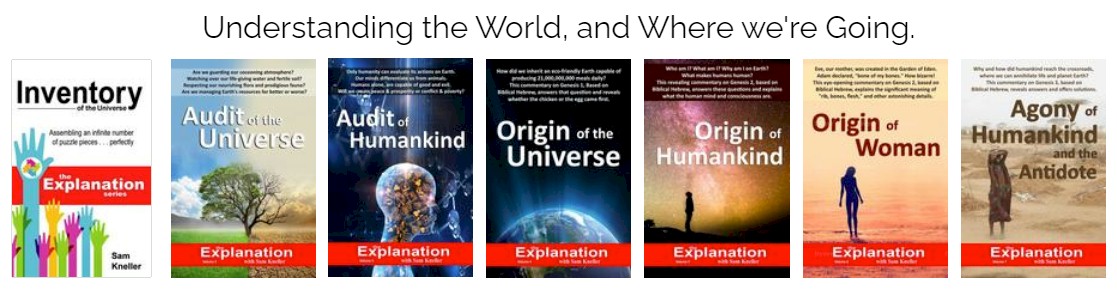
The Explanation series of seven books. Free to read online or purchase these valuable commentaries on Genesis 1-3 from your favorite book outlet. E-book and paperback formats are available. Use this link to see the details of each book and buy from your favorite store.
Since you read all the way to here… you liked it. Please use the Social Network links just below to share this information from The Explanation, Theology and the Mind-Body Problem: The Stunning Truth After 3 Strikeouts
Let’s Connect!