


Can Matter Create Consciousness? Science’s Shocking Confession and The Baffling Truth Behind Your Brain
Your brain holds 100 billion neurons, each one wired to 50,000 others — and after decades of research, science still can’t explain how that wiring produces a single conscious thought. Chapter 3 of Life After Breath asks the question directly: can matter create consciousness?
This is Week 5 of a 52-week journey through Life After Breath: A Hitchhiker’s Guide to Consciousness — a new weekly series from The Explanation. Every Tuesday, a new chapter lands on YouTube, and in your inbox.
This series has already hit two “impossible” moments: a universe fine-tuned to impossible odds, and dead chemicals somehow sparking to life. Chapter 3 is the third, and by the chapter’s own admission, the biggest: can a physical brain actually produce a non-physical mind?
If this exact question — can the brain, a physical organ, explain the mind — sounds familiar, it should: here’s an earlier, deeper dive into the same territory. This chapter takes a different route into it — through a specific, real critique of a real book that claims to have the answer.
Chapter 3: Brain to Mind. Can Matter Create Consciousness?
We’re tackling the “mind-body problem” from a secular starting point: no God, just science and chance. The big question: how does the lump of wet, physical matter in our skulls (the brain) supposedly create the invisible, immaterial thing that is us (the mind)? Everyone agrees both exist. The fight is about how, or if, one created the other.
I’ve been quoting real experts because I’m not one. You need to hear this from the horse’s mouth. So, let’s set the scene. Imagine a single neuron. It’s stupid. But cram 100 billion of them into your skull and let each one chat with 50,000 others. That insane, trillion-line group chat is your brain. It’s a chaotic improv orchestra that creates every thought and idea you’ve ever had.
It’s so complex that the official story—that this all just randomly evolved—requires some serious faith. Magazines like New Scientist have to “speculate” and use words like “perhaps.” A jaw muscle might have mutated, “perhaps” letting skulls expand. That’s not a solid fact; it’s their best guess.
Now, a book called Brain to Mind by James Zull aims to “explain how a brain becomes a mind through experience.”
Pump the brakes. Let’s tear that apart.
First, he says we should focus on asking questions, not just “getting it right.” Absolutely. Critical thinking beats memorization.
But the second part? “A brain becomes a mind through experience.” That sounds backwards. The brain is a physical organ. How can a lump of matter have an experience? To have an experience, you need something to feel it, to perceive it—you need a mind first! It’s the ultimate chicken-and-egg problem. This is the heart of the issue: can physical matter create the metaphysical?
Are the Brain and Mind Even the Same Thing?
Nope. Not according to the experts. In interviews, neuroscientists like Robert Stickgold admit, “We don’t know how matter gives rise to mind.” The people who study this for a living are stumped. This isn’t settled science; it’s a massive mystery.
So, can science even explain the human mind?
Complexity isn’t the real barrier; it’s the spooky stuff. Introspection. The feeling of being you. Our sense of conscious will. That’s what makes us more than just smart animals, and it’s what puts us completely out of science’s reach. NPR quotes a scientist who said even if we could see every single brain molecule and the thoughts they create, the gap between them would still be “intellectually impassable.” We see the correlation but have no explanation for the cause.
This is called The Hard Problem of Consciousness.
It’s not about what the brain does (process data), but why any of it feels like anything. Why does seeing red feel a certain way? Why does pain hurt? Explaining the mechanics doesn’t explain the experience. This might be the wall science can never climb.
I could fill pages with quotes from brilliant people all admitting the same thing: “We have no idea.” Your critical thinking alarm should be blaring.
So, what’s the answer? New theories pop up all the time, but they all basically say the same thing: “It’s in the brain, it’s complex, and we’re still figuring it out.” It’s a scientific shrug.
For a deeper dive, check out the chapters on this in Inventory of the Universe and Audit of the Universe. They get into the nitty-gritty of how your brain multitasks and even explore the radical idea that thinking might activate the brain, not the other way around.
This is our last chapter grilling science. But we have to tackle one last comeback: “What about smart animals? Doesn’t that prove the mind evolved?”
The Breakthroughs Behind “Can Matter Create Consciousness”
From Neuroscience & Philosophy of Mind:
The “Hard Problem” as a Permanent Barrier: This chapter authoritatively presents the “Hard Problem of Consciousness” not as a temporary challenge but as a fundamental limit of the scientific method itself. Consciousness (qualia, the subjective experience of “what it is like”) cannot be explained by describing physical brain functions.
Distinguishes Brain from Mind: It firmly establishes a categorical distinction between the brain (a physical, measurable organ) and the mind (the metaphysical output of reasoning, creativity, and consciousness), arguing that the former cannot engender the latter.
Quotes Scientific Capitulation: It uses direct quotes from top neuroscientists (e.g., “We don’t know how matter gives rise to mind”) to demonstrate that the failure to explain the mind is a recognized fact within the scientific community, not an external criticism.
From Psychology & Epistemology:
The “Experience” Paradox: It critiques the common materialist claim that “a brain becomes a mind through experience” by pointing out the circular logic: to have an experience, one must first possess the capacity for perception, emotion, and awareness—which are functions of a mind, not a physical organ.
Human Exceptionalism as a Clue: It notes that the aspects of the mind that make us feel exceptional—introspection, conscious will, moral reasoning—are precisely the ones considered beyond scientific explanation, suggesting they originate from a different source.
From Theology:
Uses Science to Clear the Ground for Theology: By demonstrating that science hits an impassable wall at the problem of consciousness, the chapter creates intellectual space for a non-material, spiritual explanation, making the subsequent turn to a theological solution appear necessary and rational.
Positions the Mind as the Key Immaterial Component: It identifies the human mind as the definitive case of the immaterial emerging in a material universe, directly setting up the need for an immaterial cause (God) as the only logical source.
FAQ: Can Matter Create Consciousness?
Can matter create consciousness?
Nobody knows — including, by their own admission, the neuroscientists who study it for a living. Robert Stickgold’s line sums up where the science actually stands: “We don’t know how matter gives rise to mind.” Chapter 3 of Life After Breath argues this isn’t a temporary gap waiting on more research; it’s what philosophers call the Hard Problem of Consciousness, and it may be permanent.
What is the Hard Problem of Consciousness?
It’s the question of why physical brain processes feel like anything at all — not what the brain does, but why any of it is accompanied by subjective experience. Explaining the mechanics of a brain (which regions fire, in what pattern) doesn’t explain why seeing red feels a certain way, or why pain hurts. Chapter 3 calls this “the wall science can never climb.”
Are the brain and mind the same thing?
No — not according to the experts the chapter cites. The brain is a physical, measurable organ; the mind is what does the reasoning, creating, and experiencing. Chapter 3 of Life After Breath treats collapsing the two into one thing as a category error, not a simplification. By asking the question, can matter create consciousness? we all recognize they are two different entities.
Why can’t science just explain how the brain creates the mind?
Because, per NPR’s own reporting, even a complete map of every brain molecule wouldn’t close the gap — it would still be, in the words of one scientist quoted in the chapter, “intellectually impassable.” Chapter 3 also raises a chicken-and-egg problem: to have an experience at all, something has to already be capable of perceiving — which means you need a mind before experience can supposedly build one. Strip away the jargon, and it’s really just another way of asking: can matter create consciousness at all?
How do I follow along each week?
Subscribe to the weekly email to get each new chapter as it releases, or catch the video version on YouTube.
What’s Next
Next week, chapter 4 turns to the obvious rebuttal: if animals show flashes of intelligence too, doesn’t that prove the mind just evolved, step by step, like everything else?

Want the full, scholarly original now instead of waiting a week at a time? Get Mind-Body Problem Solved.
Dig Deeper into The Explanation
Online Study Courses to Uncover the Mystery of Adam and Eve’s Nakedness… with no fuss. Free video mini-course revealing the God-intended meaning of Scripture via Biblical Hebrew. It’s so easy, it’ll blow you away. Join now and add new motivation to your Bible study.
Join The Explanation Newsletter to stay informed of updates. and future events. No obligations, total privacy, unsubscribe anytime, if you want.
The form you have selected does not exist.
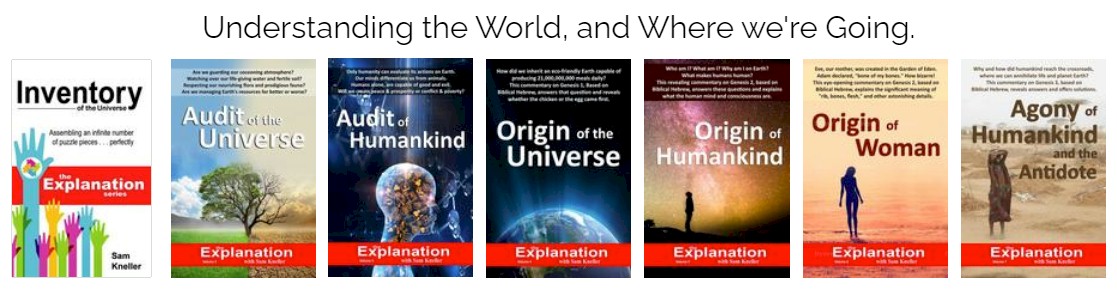
The Explanation series of seven books. Free to read online or purchase these valuable commentaries on Genesis 1-3 from your favorite book outlet. E-book and paperback formats are available. Use this link to see the details of each book and buy from your favorite store.
Since you read all the way to here… you liked it. Please use the Social Network links just below to share this information from The Explanation, Can Matter Create Consciousness? The Impossible 100-Billion-Neuron Mystery
Let’s Connect!